

By using our website, you agree to the use of cookies as described in our Cookie Policy
What Couples Should Know About New Orleans Wedding Photography
Most couples think wedding photography is just about showing up and smiling. Point, shoot, done. But New Orleans doesn't work that way — and if you're not ready for it, you'll miss half the magic. This city has rhythm, texture, and chaos baked into every corner. Your photographer needs to know how to work with that, not against it. And you need to understand what makes shooting here different from anywhere else.
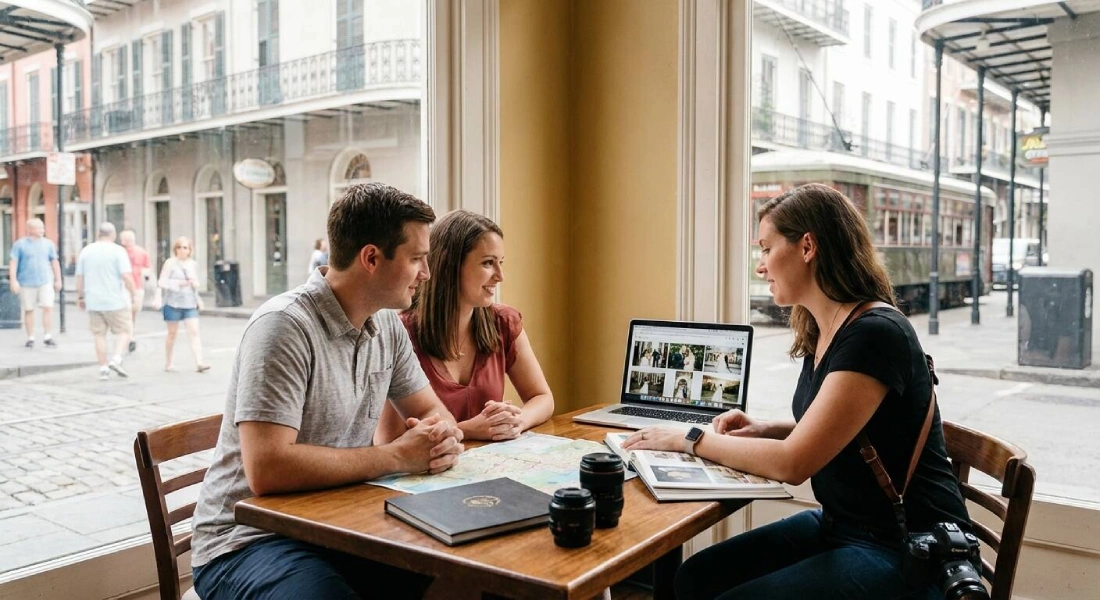
So here's what matters. If you're getting married in the Crescent City, you're not just booking a vendor. You're hiring someone who knows how light moves through oak canopies, how second lines shift on a dime, and how to shoot in humidity that fogs a lens in seconds. Every decision — from timing to location to backup plans — should be grounded in how this city actually behaves, not how it looks in a brochure. When planning your wedding reception venues in New Orleans, these same principles apply to every vendor you choose.
The City Gives You Options Most Venues Can't
New Orleans doesn't need much help looking good. The French Quarter alone offers wrought iron, pastel facades, and cobblestone streets that photograph like a postcard. But if you stop there, you're leaving a lot on the table. City Park has moss-draped oaks older than your grandparents. Audubon Park offers wide-open light and clean lines. The Marigny has color and grit. The Garden District has columns and symmetry.
Your photographer should know which spots work for your vibe and which ones are overrun by tourists at noon. We've seen couples try to shoot in Jackson Square at 2 p.m. on a Saturday — it's a mess. Timing and location aren't just aesthetic choices. They're logistical ones. Ask your photographer where they'd go if it were their wedding. That's where the real answers come out. Understanding how to choose the perfect wedding venue involves these same considerations about timing and location.
- French Quarter works best early morning or late evening when foot traffic dies down
- City Park offers shade and softer light under the oaks, even midday
- Audubon Park gives you clean, open shots without the visual noise
- The Marigny and Bywater bring color, texture, and a looser editorial feel
- Garden District mansions photograph beautifully but require permits for some properties
Weather Here Doesn't Wait for Permission
You can check the forecast all you want — New Orleans will do what it wants. Rain rolls in fast, especially in spring and summer. Humidity fogs lenses. Heat makes makeup run. And yet, some of the best wedding photos we've seen came from couples who didn't panic when the sky opened up. Wet streets reflect light. Umbrellas add drama. Overcast skies eliminate harsh shadows.
But you can't wing it. Your photographer should have a rain plan that doesn't involve huddling under a tent for two hours. Covered courtyards, historic interiors, and wraparound porches all work. So does shooting through windows or using architectural cover creatively. The couples who get the best results are the ones who trust their photographer to pivot without losing the shot list. When considering the best time of year for a New Orleans wedding, weather patterns should heavily influence your decision.
- Always have a covered backup location scouted in advance
- Bring clear umbrellas — they photograph better than solid colors
- Humidity will affect hair and makeup, so plan touch-up time into your timeline
- Overcast light is actually ideal for portraits — no squinting, no harsh shadows
- Rain can create stunning reflections on streets and sidewalks if you're willing to embrace it
Second Lines Aren't Just for Show
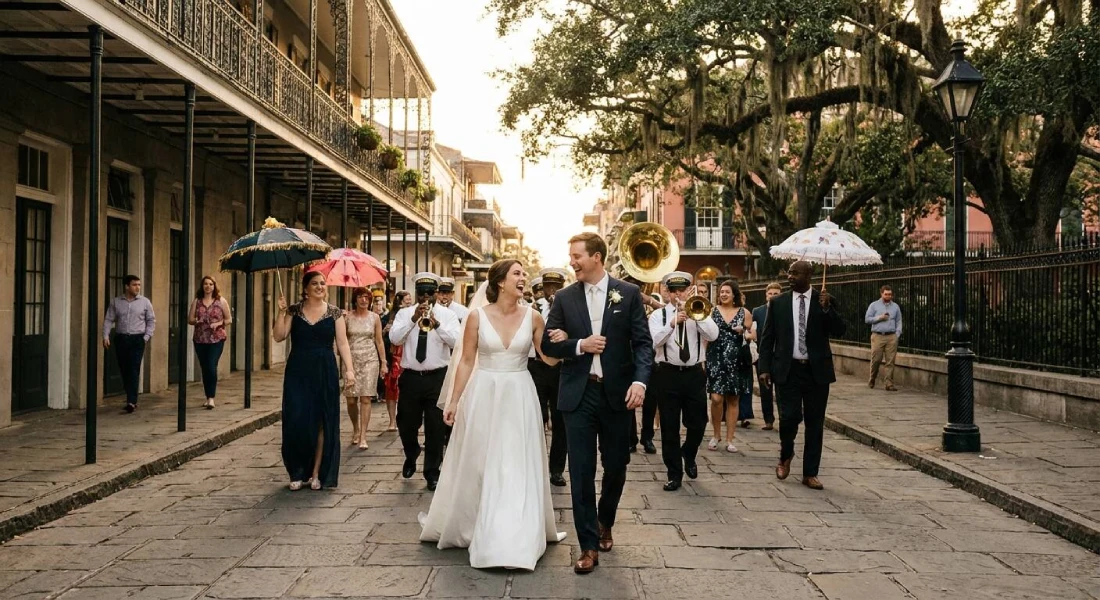
If you're doing a second line, your photographer needs to be ready for it. These aren't staged moments. They move fast, they're loud, and they're unpredictable. The best shots come from photographers who know how to anticipate movement, work in tight spaces, and capture energy without getting trampled by a tuba player.
This is where experience in New Orleans weddings actually matters. A photographer who's shot fifty weddings in other cities but none here won't know how to handle a brass band weaving through the Quarter at dusk. They won't know where the light hits on Royal Street or how to shoot a crowd in motion without losing focus. Ask your photographer how many second lines they've shot. If the answer is zero, that's a red flag.
- Second lines require fast shutter speeds and a photographer who can move with the crowd
- Brass bands and umbrellas add motion and color but also visual chaos
- Your photographer should scout the route in advance to identify the best shooting angles
- Candid moments during a second line often outshine posed portraits
- Make sure your photographer has backup equipment — things get bumped, dropped, and soaked
Not Every Photographer Knows This City
Portfolios can be deceiving. A photographer might have gorgeous work from California or New York, but that doesn't mean they know how to shoot in New Orleans. The light here is different. The pace is different. The logistics are different. You need someone who's worked in this humidity, navigated these streets, and dealt with the quirks of local venues.
When you're vetting photographers, ask specific questions. How many weddings have they shot in New Orleans? Do they know which permits are required for certain locations? Can they recommend backup indoor spots if weather turns? Do they have relationships with local vendors who can help troubleshoot on the fly? The answers will tell you whether they're actually embedded in this city or just passing through. These are similar to the questions to ask before booking an event venue to ensure you're working with experienced local professionals.
- Ask how many New Orleans weddings they've photographed, not just weddings in general
- Check if they're familiar with your venue and its lighting challenges
- Find out if they have backup gear and a plan for equipment failure
- Confirm they understand local permit requirements for public spaces
- Look for photographers who collaborate with other local wedding vendors regularly
Golden Hour Isn't Negotiable
Light makes or breaks a photo, and in New Orleans, golden hour is your best friend. That's the hour right after sunrise or just before sunset when the light is soft, warm, and forgiving. Shoot in the middle of the day and you'll get harsh shadows, squinting faces, and washed-out colors. Shoot during golden hour and everything glows.
This means your timeline matters. A lot. If your ceremony is at 5 p.m. and golden hour is at 6:30, you need to build in time for portraits before the light disappears. Some couples do a first look earlier in the day to maximize shooting time. Others sneak away during cocktail hour for sunset shots. Either way, your photographer should be driving this conversation, not waiting for you to figure it out. Choosing the right wedding ceremony venue in New Orleans with optimal lighting conditions can make all the difference in your photos.
- Golden hour in New Orleans typically happens between 6 and 7:30 p.m. in summer
- Plan your ceremony time around when you want your best light for portraits
- First looks allow you to capture more photos in ideal lighting conditions
- Midday sun creates harsh shadows — avoid scheduling outdoor portraits between 11 a.m. and 3 p.m.
- Sunset shots during your reception require a coordinated exit and quick turnaround
Your Photos Should Feel Like New Orleans
Generic wedding photos could have been taken anywhere. New Orleans wedding photos should feel like they could only have been taken here. That means incorporating the details that make this city what it is — beignets, streetcars, Mardi Gras beads, live oak trees, cast-iron balconies, and the energy of a place that never stops celebrating.
Talk to your photographer about what elements matter most to you. Maybe it's a shot on the streetcar. Maybe it's a portrait under the oaks in City Park. Maybe it's capturing your guests dancing to a brass band. Whatever it is, make sure your photographer understands that the city itself is part of your story. The couples who get the most out of their New Orleans wedding photos are the ones who lean into the location instead of treating it like a backdrop. When you're ready to start planning, explore complete wedding services that understand how to showcase the authentic character of this incredible city.
Let’s Capture Your New Orleans Story
We know your wedding deserves more than cookie-cutter photos—it deserves the spirit and soul of New Orleans in every frame. If you want images that truly reflect your day and this city, let’s talk about how we can make it happen together. Call us at 504-733-5020 or get pricing and let’s start planning your unforgettable celebration.
‹ Back
Recent Posts
-
All-Inclusive Wedding Venues in New Orleans: What Brides Should Compare
September 4, 2026
-
-
What Makes a Wedding Venue in New Orleans Feel Timeless?
August 7, 2026
-
Indoor Wedding Ideas for Summer in New Orleans
July 24, 2026
-
Planning a Birthday Party at a Venue in New Orleans
July 10, 2026